Our Game Development Process
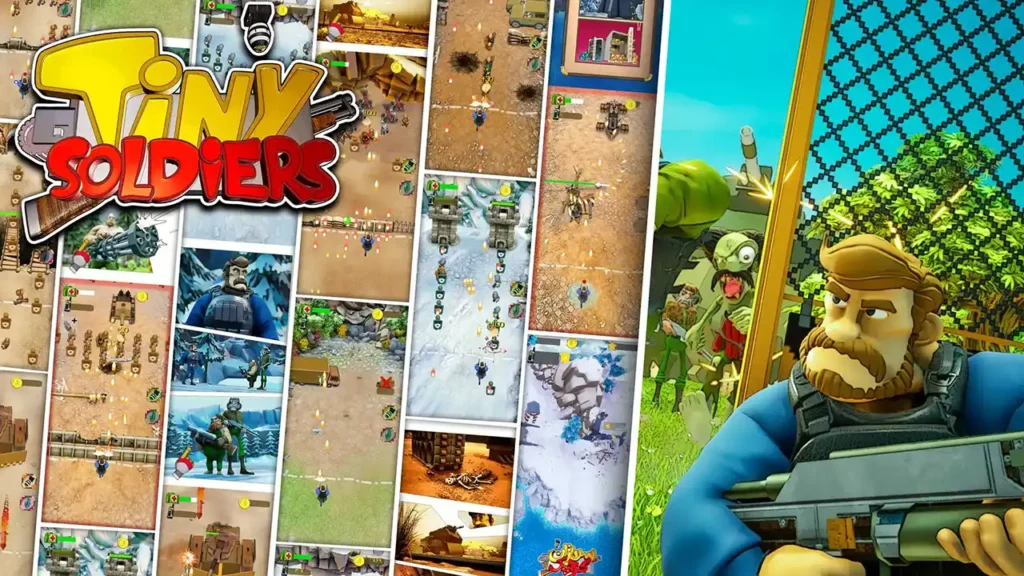
Every game begins with an idea, but an idea only becomes a real experience when it is shaped through structure, direction, and development. At Dorna Works, our game development process begins with concept development and early planning. In this stage, we define the main idea of the game, the type of experience it should create, the world it takes place in, the visual direction, the gameplay goals, and the overall feeling we want the player to have. This early phase helps us understand what the game is trying to achieve and what kind of interactive experience it needs to become.
After the concept is clear, we move into planning and pre-production. This is where the project begins to take a more practical form. We define the gameplay structure, the core mechanics, the level direction, the visual language, and the technical needs of the project. Depending on the scale of the game, this stage may include references, gameplay descriptions, environment ideas, mechanic planning, and production decisions that help guide development. The goal is to create a clear roadmap before the main production phase begins.
Once the project enters production, the game starts to take shape inside Unreal Engine. This is where environments are built, assets are placed, lighting is developed, scenes are organized, and the visual world of the game begins to function as part of the player experience. The game world is not only designed to look visually strong, but also to support movement, interaction, pacing, and readability. At this stage, space becomes part of gameplay, and visual design begins to work together with player action.
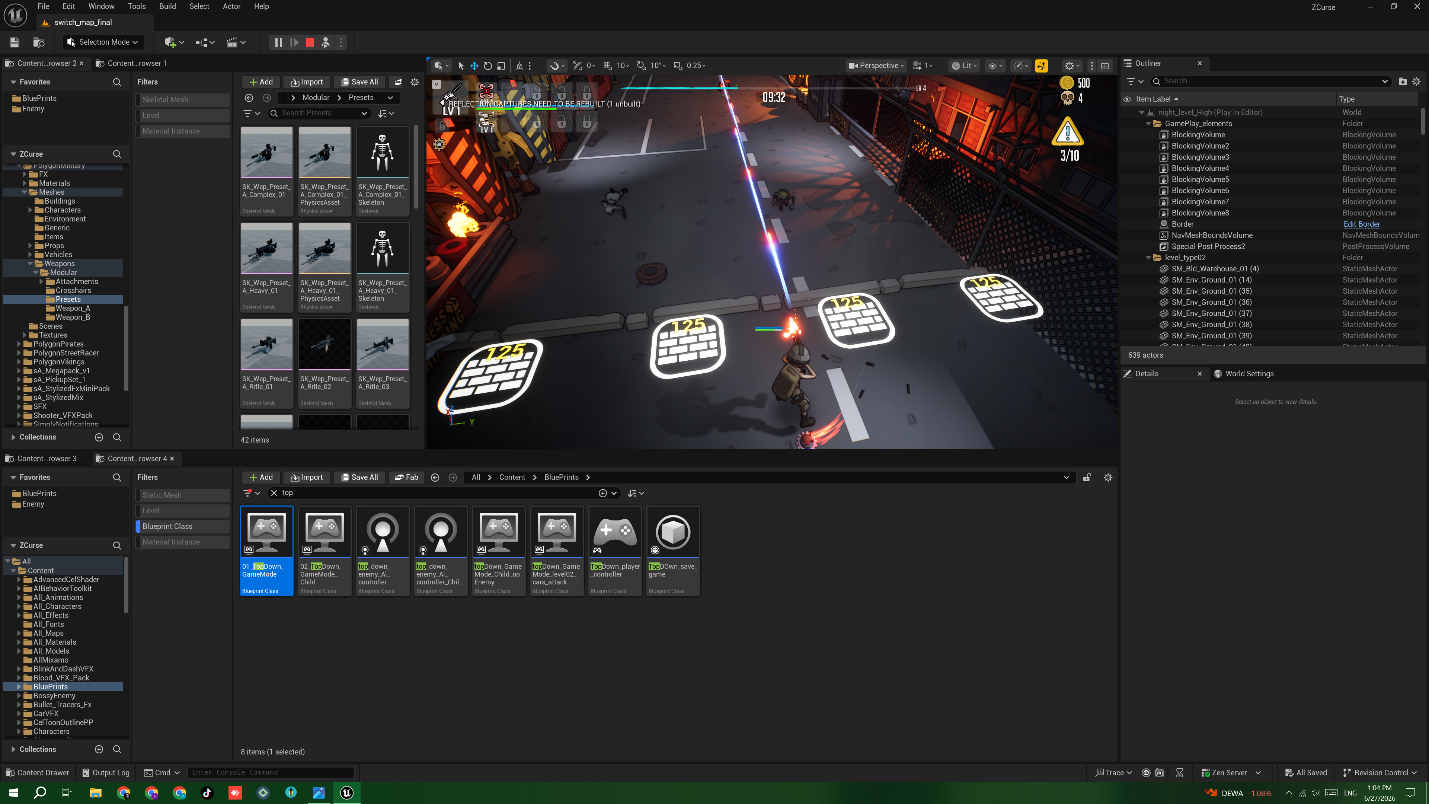
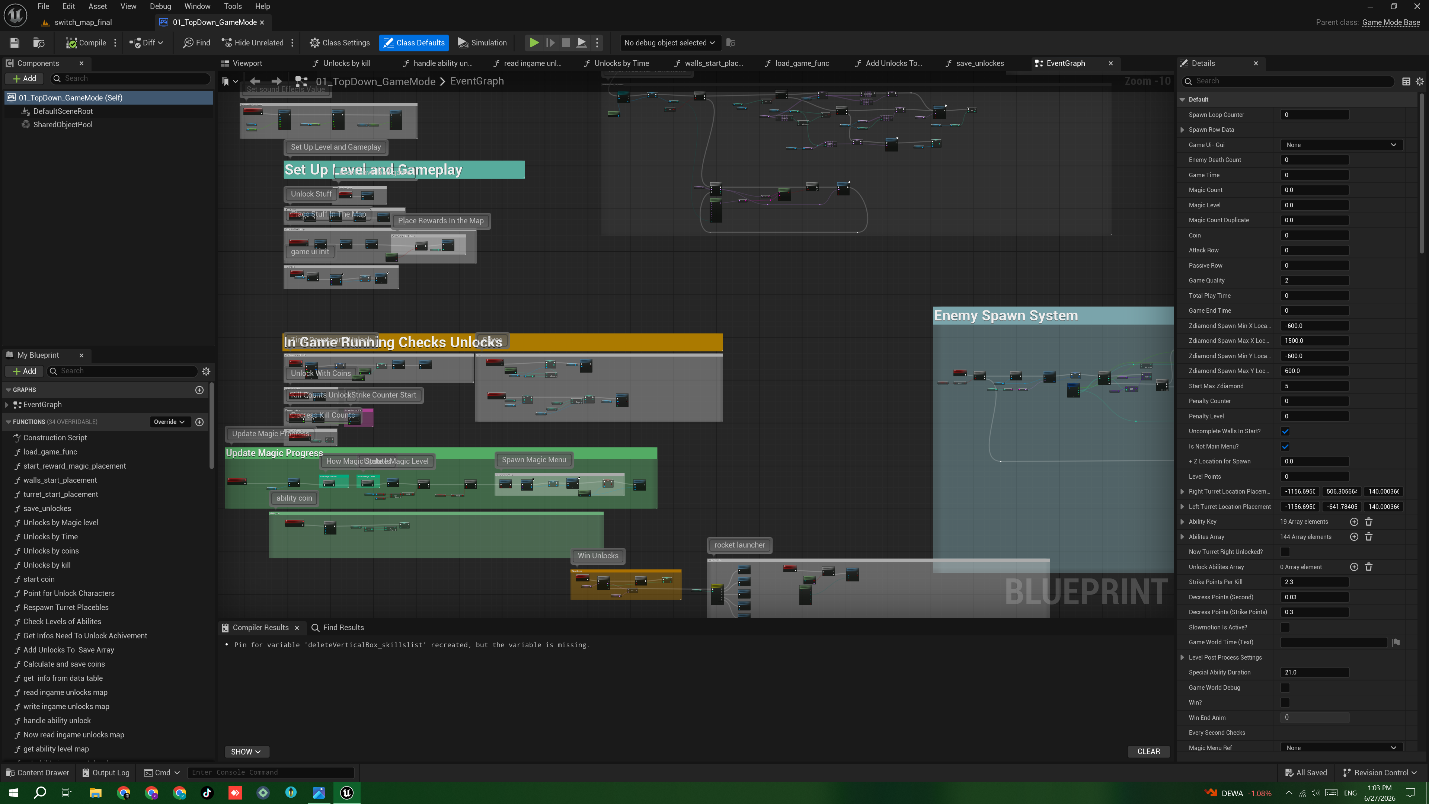
At the same time, gameplay systems are developed through logic, interaction, and real-time implementation. Blueprint plays an important role in this process, allowing mechanics, triggers, behaviors, events, and player responses to be structured directly inside the engine. This is where game logic becomes active and playable. Actions need to create meaningful outcomes, interactions need to feel responsive, and each system needs to support the overall flow of the experience. This stage turns concepts into working mechanics and helps define how the game actually behaves.
As the first playable versions are built, we move into testing, review, and iteration. Game development is never a straight path from concept to final result, and this stage is essential for improving the quality of the experience. We evaluate how the player moves through the world, how mechanics function, how clearly the environment communicates, and whether the overall rhythm of the game feels engaging and consistent. Based on testing and feedback, we refine systems, adjust pacing, improve visual clarity, and solve technical issues that affect the play experience.
In the final stage, we focus on polish, optimization, and presentation. Performance is improved, visuals are refined, lighting is adjusted, interactions are reviewed, and the game is prepared as a more complete and stable experience. Whether the project is a prototype, a promotional experience, an educational game, or a larger interactive production, the goal remains the same: to create a game that feels clear, responsive, visually strong, and enjoyable to play.
At Dorna Works, we see game development as a process that connects creative ideas with technical execution. Concept gives the project direction, Unreal Engine gives it space to take shape, Blueprint gives it logic and interaction, and testing helps refine it into a stronger final experience. Through this process, we turn early ideas into interactive worlds that players can enter, explore, and experience